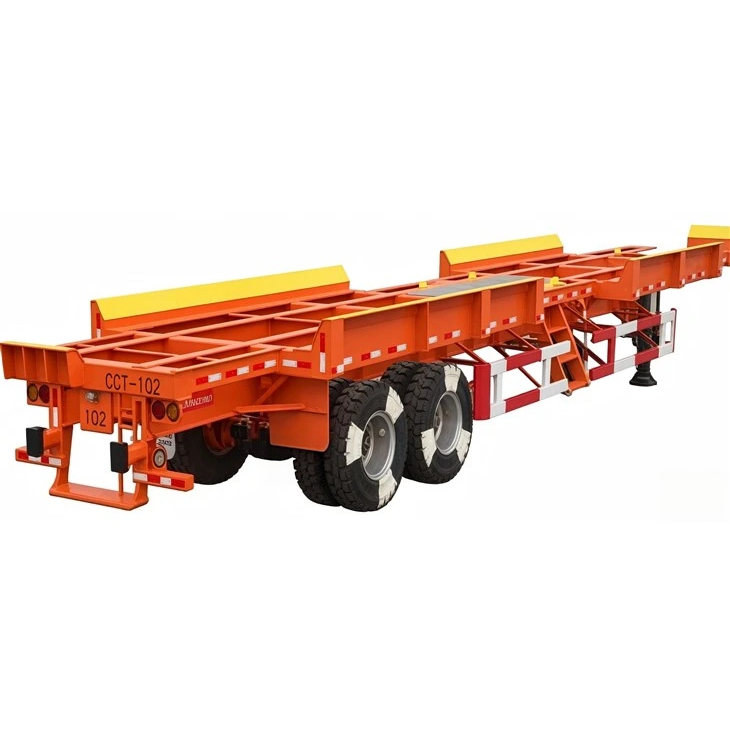


Thanks to its unique structural design, the detachable gooseneck low-bed trailer demonstrates significant advantages in the field of heavy-cargo transport, excelling particularly in terms of flexibility, safety, cost-efficiency, and adaptability. The following analysis details these advantages across multiple dimensions:
Structural Flexibility: Adapting to Diverse Cargo Requirements
Detachable Gooseneck Design
Functional Versatility: The gooseneck section can be rapidly detached-via bolts, hydraulic systems, or pneumatic controls-to accommodate various transport needs. When transporting extra-long cargo (such as wind turbine towers or bridge components), detaching the gooseneck extends the trailer bed length to over 20 meters, preventing the cargo from overhanging the vehicle boundaries. Conversely, when transporting standard cargo, reattaching the gooseneck lowers the bed height, thereby enhancing driving stability.
Space Optimization: By adjusting the position of the gooseneck, the length of the cargo bed can be flexibly altered to maximize transport space utilization and minimize the number of required trips. For instance, the bed can be shortened when transporting short steel sections and extended when transporting long pipes, enabling a "multi-purpose vehicle" capability.
Enhanced Maneuverability: When transporting extra-wide cargo (such as large glass curtain walls), detaching the gooseneck effectively reduces the overall vehicle width. This allows the trailer to navigate width-restricted road sections, avoiding potential fines for oversized loads or obstructions to traffic flow.
Modular Cargo Bed Design
Rapid Configuration: The cargo bed is divided into multiple detachable modules (e.g., a front loading zone, a central fixed zone, and a rear extension zone) that can be flexibly combined to suit the specific dimensions and shapes of the cargo. For example, the rear module can be extended when transporting long steel bars, while the central module can be removed to create a recessed well when transporting bulky construction materials.
Customized Securing: Specialized securing devices-such as V-grooves and tie-down anchor points-are designed to suit different types of cargo (e.g., steel pipes, steel plates). This ensures that the cargo remains firmly secured and immobile during transit, thereby minimizing the risk of damage.
Lightweight Design: The modular structure reduces the trailer's tare weight, thereby increasing cargo-carrying efficiency while simultaneously lowering fuel consumption and tire wear.
Loading and Unloading Efficiency: Significantly Reducing Time and Costs
Low-Bed Design
Direct Loading and Unloading: The cargo bed features a low deck height (typically between 0.8 and 1.2 meters), allowing heavy equipment-such as excavators and wheel loaders-to drive directly onto the platform. This eliminates the need for auxiliary lifting equipment (cranes), reducing the loading and unloading time from the 2–4 hours typically required by traditional methods to less than 30 minutes. Stepless Adjustment: Hydraulic or pneumatic control systems enable stepless adjustment of the cargo deck height, allowing it to match various loading and unloading platforms (such as warehouse docks or construction site pits) and thereby reducing manual handling and equipment adjustment time.
Multi-Angle Tilting: Certain models are equipped with a deck-tilting function; when transporting bulk materials (such as sand, gravel, or coal), the deck can be tilted to facilitate rapid unloading, significantly boosting operational efficiency.
Rapid Assembly and Disassembly System
Hydraulic/Pneumatic Actuation: Gooseneck detachment and deck height adjustments are driven by hydraulic cylinders or air springs. The operation is simple-requiring no complex tools-and can be performed by a single person, thereby reducing labor costs.
Standardized Interfaces: The modular deck design features standardized interfaces, eliminating the need for additional adjustments during module swaps. This minimizes vehicle downtime and improves transport turnover rates.
Safety: Comprehensive Protection for Cargo and Vehicle
Low Center of Gravity Design
Enhanced Stability: The low deck height lowers the vehicle's center of gravity, reducing lateral sway and the risk of rollovers during transport. This design is particularly well-suited for transporting heavy or top-heavy cargo (such as steel coils or transformers).
Optimized Braking Performance: The low center of gravity ensures a more even distribution of forces during braking, shortening the braking distance and enhancing overall driving safety.
Overload Monitoring and Warning System
Real-Time Pressure Monitoring: The system utilizes pressure sensors to display the cargo deck load in real time. It automatically triggers an alarm in the event of an overload, preventing structural deformation of the deck or damage to the vehicle caused by excessive weight.
Axle Load Balancing Technology: A multi-axle configuration combined with an intelligent load distribution system ensures that the load is evenly distributed across all axles, preventing single-axle overloading and extending the vehicle's service life.
Anti-Slip and Securing Devices
Deck Surface Treatment: The deck surface features anti-slip steel plating or rubber mats to increase friction between the cargo and the deck, preventing cargo slippage during transport.
Dedicated Securing Systems: The vehicle is equipped with various securing devices-such as chains, tie-down straps, and anti-slip chocks-with specific securing protocols designed for different types of cargo (e.g., cylindrical steel products or irregularly shaped structures) to ensure maximum cargo stability.
Cost-Effectiveness: Significant Reduction in Long-Term Operating Costs
Reduced Trip Frequency
High-Capacity Design: By extending the deck length or adjusting modular components, the cargo capacity per trip can be increased by 30% to 50%. This reduces the number of round trips required, thereby lowering costs associated with fuel, tolls, and labor. Mixed Cargo Transport: The modular platform supports the simultaneous transport of diverse cargo types (e.g., steel and glass), thereby boosting vehicle utilization rates and eliminating the need for empty or partially loaded runs.
Reduced Maintenance Costs
Lightweight Structure: The modular design minimizes redundant components, reducing the vehicle's tare weight by 10%–15%. This reduces wear and tear on tires, braking systems, and suspension components, thereby extending maintenance intervals.
Standardized Parts: Universal interfaces and standardized components simplify repair procedures and reduce spare parts inventory costs, while simultaneously enhancing maintenance efficiency.
Enhanced Transport Efficiency
Rapid Turnaround: Reduced loading/unloading times and enhanced route adaptability allow vehicles to complete 20%–30% more trips per day on average, resulting in a direct increase in revenue.
Reduced Risk of Fines: Improved vehicle maneuverability and a compliance-oriented design (including adaptability to height and width restrictions) help avoid fines associated with exceeding dimensional limits, thereby mitigating operational risks.
Adaptability: Covering All Transport Scenarios
Capability for Complex Terrain
Multi-Axle Configuration: Supports configurations with 6, 8, or even more axles to effectively distribute loads, enabling the vehicle to navigate complex terrains such as soft ground and mountainous roads.
Independent Suspension System: Select models are equipped with independent suspension systems, which enhance vehicle stability on rough or uneven surfaces and minimize potential impact damage to the cargo.