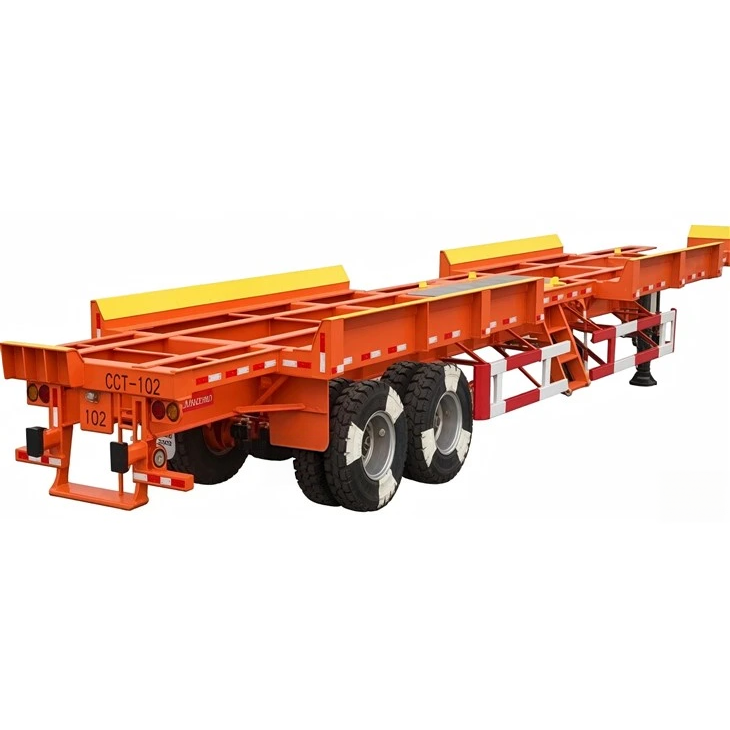


The performance of low-bed gooseneck trailers under challenging road conditions is a complex matter. In favorable environments-such as on flat highways-the low-profile design helps reduce wind resistance, thereby enhancing travel speed and fuel efficiency. Under these conditions, the trailer operates smoothly, is relatively easy for the driver to maneuver, and offers a high level of ride comfort for passengers.
However, when encountering rugged mountain roads, muddy terrain, or sections riddled with deep potholes, the low ground clearance becomes a distinct disadvantage. The undercarriage is prone to scraping against the ground, potentially damaging chassis components or even rendering the trailer unable to traverse certain sections, resulting in it becoming stranded. In such scenarios, the inherent advantages of the gooseneck structure are also somewhat compromised; since the gooseneck section is relatively heavy, navigating uneven terrain can destabilize the trailer's center of gravity, thereby increasing the risk of a rollover.
Furthermore, road conditions in challenging environments are often highly variable and may present obstacles such as sharp rocks or fallen branches. Low-bed trailers are more susceptible to scratches and damage from these obstructions, leading to increased maintenance costs. In summary, the performance of low-bed gooseneck trailers under adverse road conditions is far from ideal; drivers must exercise extreme caution and prudence, and meticulously plan their routes in advance to avoid unnecessary losses.