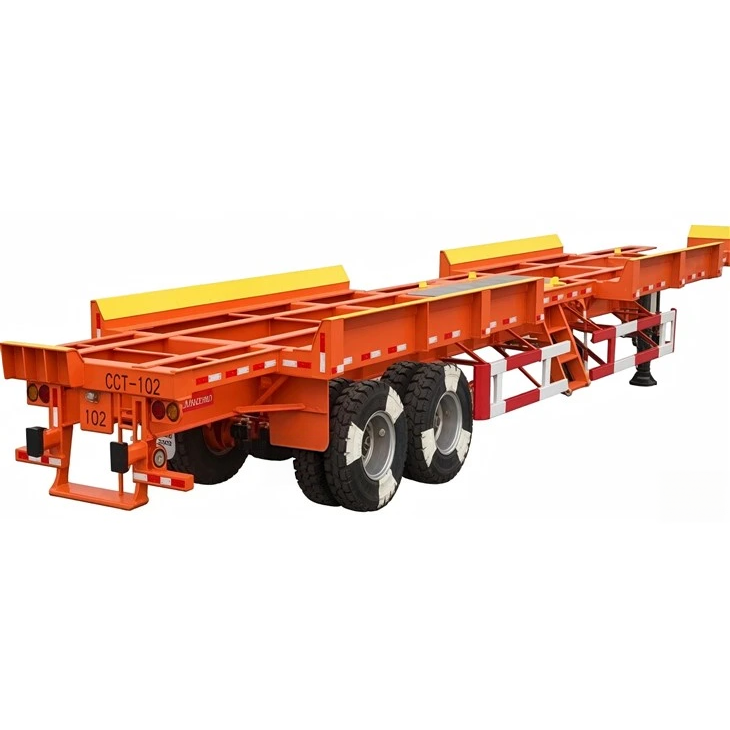


In the contemporary logistics and transportation sector, container skeletal trailers play a pivotal role. Distinguished by their unique structure and performance capabilities, they demonstrate numerous significant transportation advantages, thereby greatly propelling the advancement of the cargo transport industry.
First, in terms of loading capacity, container skeletal trailers boast exceptional load-bearing capabilities. Their design is specifically tailored for container transport, enabling them to accommodate standard containers of various specifications. Whether the containers are 20-foot, 40-foot, or other common sizes, they can be securely mounted onto the skeletal trailer. This standardized compatibility design facilitates smoother transitions of cargo between different modes of transport. For instance, at port terminals, containers can be effortlessly transferred from cargo vessels onto skeletal trailers for onward transport to inland warehouses, eliminating concerns regarding handling difficulties caused by size mismatches. Furthermore, the structure of the skeletal trailer itself is meticulously engineered; constructed from high-strength steel, it possesses sufficient strength and rigidity to withstand the weight of the container as well as the various external forces encountered during transit. This ensures safe and stable operation even under full-load conditions, thereby significantly increasing the volume of cargo transported per trip and reducing the unit cost of transportation.
Second, regarding transportation flexibility, container skeletal trailers demonstrate outstanding performance. Compared to certain large-scale, specialized transport vehicles, they offer superior maneuverability. They can transport containers directly to designated locations for loading and unloading, without the need to rely on specific intermediate transfer facilities-a requirement often associated with other modes of transport. Whether the destination is a factory warehouse within a city or a construction site in a remote region, provided that road conditions permit, the skeletal trailer can reach it directly. This "door-to-door" transport capability vastly enhances the efficiency and convenience of logistics operations. It minimizes the number of intermediate transfer points during transit, thereby reducing the risk of cargo damage while simultaneously saving time and effort for the client. For example, in cases involving time-sensitive cargo requiring urgent delivery, utilizing a container skeletal trailer allows for the rapid, direct transport of goods from the point of origin to the final destination, effectively meeting the client's requirements for timely delivery.
Moreover, container skeletal trailers incorporate numerous safeguards to ensure transportation safety. On one hand, their braking systems feature an optimized design equipped with high-performance braking mechanisms, enabling rapid deceleration in emergency situations and thereby ensuring the safety of the vehicle during transit. Furthermore, the vehicle's suspension system is exceptional; it effectively dampens the impact of road irregularities on the container, thereby preventing cargo damage caused by vibration. Additionally, to prevent the container from shifting or swaying during transit, the skeletal trailer is equipped with specialized securing mechanisms-such as twist locks and lashing gear-that firmly anchor the container to the chassis. The combined application of these safety measures allows skeletal trailers to maximize cargo security during transport, significantly reducing the risk of loss resulting from transit-related incidents.
Moreover, the transport capabilities of skeletal trailers offer excellent versatility. They facilitate seamless integration with various modes of transport, including rail and waterways. In multimodal transport systems, skeletal trailers serve as a critical link in the cargo transfer chain, effectively harnessing the distinct advantages of each transport mode. For long-distance shipments, containers can first be transported by rail to a station near the final destination, then transferred via skeletal trailer to the ultimate delivery point; alternatively, cargo can be shipped by water to a port and subsequently transported inland by skeletal trailer. This multimodal approach not only enhances transport efficiency but also allows for the strategic selection of routes based on the specific characteristics of each transport mode, thereby reducing overall logistics costs.
From an environmental perspective, skeletal trailers also offer distinct advantages. By enabling highly efficient cargo transport, they reduce the number of vehicle trips required for a given shipment, thereby lowering fuel consumption and exhaust emissions. Furthermore, the standardized nature of containerized transport allows for the optimal utilization of vehicle cargo space, preventing the resource waste that often results from inefficient or improper cargo loading. To a significant extent, this aligns with the demands of modern society regarding environmental protection and sustainable development.
Additionally, skeletal trailers are characterized by relatively low maintenance costs. Their structural simplicity and the high interchangeability of their components make them particularly convenient and efficient to repair and maintain. Moreover, given their widespread usage, there is an abundant supply of spare parts available on the market, which further contributes to lower repair expenses. Consequently, transport enterprises can effectively control vehicle maintenance costs during their operations, thereby enhancing their overall economic efficiency. In summary, skeletal container trailers demonstrate significant advantages across multiple dimensions, including loading capacity, transport flexibility, safety, versatility, environmental friendliness, and maintenance costs. These advantages render them an indispensable and vital asset within the logistics and transportation sector, playing a pivotal role in facilitating the efficient and secure movement of cargo. Whether for domestic logistics distribution or the transport of goods in international trade, skeletal container trailers leverage their unique strengths to contribute to the prosperous development of the global economy. Looking ahead, the skeletal container trailer is poised to continue playing a crucial role across an even broader spectrum of applications within the logistics industry, driven by its exceptional performance and numerous inherent advantages.